Fans
Last updated: 2026-09-28
Fans do not cool the air; they move it. Choosing the right type and placing it well matters more than the marketing numbers on the box. These guides explain airflow, noise and placement in plain terms.
What you will find here
- Tower fan vs pedestal fan for a bedroom
- How to choose a quiet fan for sleeping
- Using a fan with an air conditioner to spread cool air
- Positioning a fan for whole-room circulation
Frequently asked questions
Are tower fans or pedestal fans quieter?
It depends on the model and the speed. Tower fans are often quieter at low speed, while pedestal fans move more air per speed step. Compare the dB rating at the speed you will actually use, not just the sleep setting.
Can a fan make a room colder?
No. A fan moves air and speeds up skin evaporation so you feel cooler, but it does not lower the air temperature. It cannot replace an air conditioner in a hot, humid room.
Products in this category
Specifications and ratings are compiled from manufacturer and retailer listings and shown as listed; they are not SmartAirGuide measurements. Some models are sold under more than one ASIN (colour, bundle or channel variants).
 Fan
DREO 13-Inch Quiet Table Fan (75 ft)
Best for: Bedrooms and offices needing quiet airflow
Key advantage: Listed 75 ft airflow with four speeds and a remote
Important limitation: Listed airflow and noise figures are manufacturer-provided.
 Fan
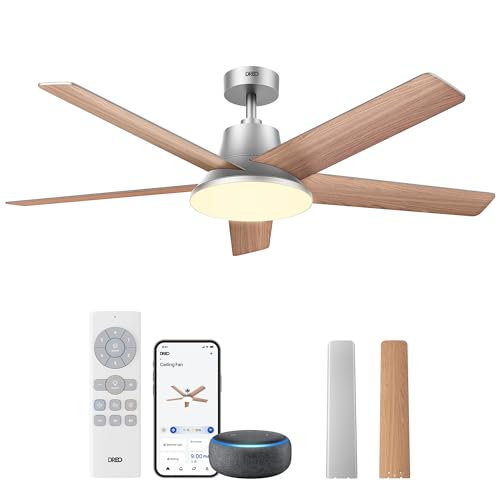
DREO 52-Inch Smart Ceiling Fan
Best for: Whole-room circulation with lighting
Key advantage: 22 dB DC motor with remote, app and Alexa control
Important limitation: Needs ceiling installation and clearance.
 Fan
DREO 12-Inch Smart Desk Fan (85 ft)
Best for: Desks and small rooms
Key advantage: Listed 85 ft airflow and a 20 dB quiet mode
Important limitation: Listed airflow and noise figures are manufacturer-provided.
Affiliate links: we may earn a commission at no additional cost to you.
Related: Portable air conditioners