How to Install a Portable AC Exhaust Hose
By SmartAirGuide Editorial · Last updated: 2026-09-26 · Published: 2026-09-26
Short answer
Connect the hose to the unit's exhaust outlet, run it as short and straight as possible to a window or door, and seal the opening so the hot air that leaves cannot come straight back in. Most portable AC complaints come down to a leaking window kit or a long, kinked hose.
What you need
- The exhaust hose and the adapters supplied with the unit.
- A window or sliding-door kit or panel.
- Foam, weatherstrip or tape to seal gaps.
- Scissors or a knife, and a level spot for the unit.
Steps
- Fit the hose adapters as shown in the manual and screw them onto the hose ends.
- Mount the window panel and check that the opening for the hose is at the correct height.
- Connect one end to the unit's exhaust and the other through the panel.
- Keep the hose as short and straight as possible; avoid coils and tight bends.
- Seal every gap between the panel, the window frame and the hose.
- Confirm the hose vents outdoors, not into another room, a garage or an attic.
- Level the unit and set drainage if the model collects condensate.
- Run it in cool mode and check for warm air leaking back around the kit.
Common mistakes
- Leaving the hose coiled or very long, which traps heat and reduces efficiency.
- Not sealing the window kit, so warm exhaust returns to the room.
- Venting into a closed space instead of outdoors.
- Blocking the unit's air intake with furniture or curtains.
Single-hose vs dual-hose
A single-hose unit pushes some already-cooled room air outside, which is less efficient. A dual-hose unit draws intake air from outside and vents it back out. Whichever you have, sealing the kit matters more than the hose type for real-world cooling.
Sources
Manufacturer installation instructions for hose and window-kit setup; U.S. Department of Energy guidance on portable AC testing and sizing.
Frequently asked questions
Can I leave the exhaust hose longer?
Keep it within the length the manual allows and as straight as possible. Longer runs and sharp bends hold warm air and reduce cooling.
Do I need a window kit?
Yes, or an equivalent sealed panel. Without it, hot exhaust air leaks back around the hose and the unit fights itself.
Can I vent through a wall or a dryer vent?
Only if the manual and local rules allow it and the vent is a proper outdoor termination. Never vent into an enclosed space.
Recommended options
If you are still choosing, compare the DOE BTU rating with the room size and check what the window kit includes.
-
 DREO 543S Portable Air Conditioner
DREO · Rating: 4.2 / 5 (1334 reviews)
-
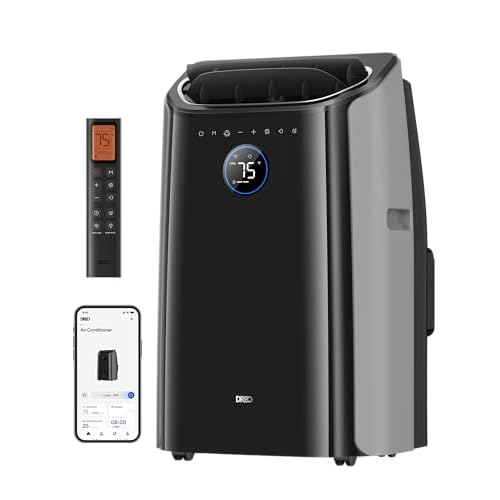 DREO 516S Portable Air Conditioner
DREO · Rating: 4.1 / 5 (746 reviews)
Some links on this page are affiliate links. We may earn a commission at no additional cost to you.
Related: Portable AC guides · Troubleshooting