Portable AC BTU: ASHRAE vs DOE Explained
By SmartAirGuide Editorial · Last updated: 2026-09-26 · Published: 2026-09-26
Short answer
A portable AC has two BTU figures because they use different tests. ASHRAE is the older, higher number; DOE is measured under more realistic conditions and is usually much lower. Size with the DOE number, and never compare an ASHRAE figure to a DOE figure.
What the two numbers mean
- ASHRAE 128: an older test that measured cooling capacity under ideal conditions, so it reads high.
- DOE (10 CFR 430): the current test introduced in 2017, which accounts for the heat a single-hose portable AC pulls back in, so it reads lower.
- Many listings still show both, which is why the same unit appears as, say, 11,000 BTU ASHRAE and 7,200 BTU DOE.
How to size a room
- Use the DOE number and a rough 20 BTU per ft² for average conditions.
- Add capacity for a sunny room, a top-floor room, a kitchen, or more than two occupants.
- Reduce it if the room is shaded and well insulated.
- Match the exhaust setup: a leaking window kit wastes capacity no matter the rating.
Worked examples
- A 250 ft² bedroom: about 5,000 DOE BTU for average conditions.
- A sunny 350 ft² living room: about 7,000–8,000 DOE BTU.
- A 150 ft² bedroom: about 3,000–4,000 DOE BTU.
Common mistakes
- Comparing an ASHRAE rating to a DOE rating and picking the "bigger" unit.
- Buying by BTU alone while ignoring a leaking window kit.
- Expecting a portable AC to match a window or split unit of the same nominal capacity.
- Ignoring the noise rating, since bigger units are usually louder.
Sources
U.S. Department of Energy, 10 CFR 430 test procedure for portable air conditioners; AHRI standards for the older ASHRAE-based rating.
Frequently asked questions
Which BTU number should I use to compare portable ACs?
Use the DOE number (sometimes shown as SACC). Compare DOE to DOE across models; the ASHRAE number will make any unit look larger than it performs.
Why is the DOE number so much lower?
The DOE test reflects real use, including the warm air a single-hose unit draws back into the room, so the measured cooling is lower than the ideal-condition ASHRAE figure.
Is a dual-hose unit worth the extra cost?
Usually for larger rooms. A dual-hose unit avoids pulling in already-cooled room air, so it uses its capacity more effectively than a single-hose unit of the same rating.
Recommended options
These listings show DOE capacity. Match that number to your room size and seal the window kit to get the rated cooling.
-
 DREO 543S Portable Air Conditioner
DREO · Rating: 4.2 / 5 (1334 reviews)
-
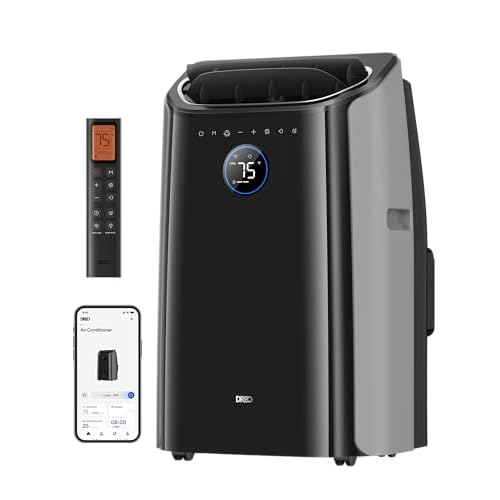 DREO 516S Portable Air Conditioner
DREO · Rating: 4.1 / 5 (746 reviews)
Some links on this page are affiliate links. We may earn a commission at no additional cost to you.
Related: Portable AC guides · Install the exhaust hose